

Why AI Fails at Anatomy: The Gap Between its “Creativity” & Reality

AI is Getting Medical Anatomy All Wrong
Molecular Fidelity in Generative AI: The Gap Between the Invented and the Real
By Laura Maaske, M.Sc.BMC Medical Illustrator & Visual Data Strategist
1. Introduction: The Risk of Geometric Hallucination
I’ve spent the last couple of years stress-testing AI image generators, and I have to admit—it’s been fascinating. But mostly because the technology is guaranteed to get the science wrong.
The error lies in the AI’s fundamental nature: it is a pattern-seeker driven by “creativity,” not a physicist driven by laws. The rapid adoption of multimodal Generative AI in drug discovery and scientific education has introduced a critical validation gap.
Crucially, these models construct their knowledge from 2D pixel arrays (databases of flat JPEGs), not volumetric physics (3D structural data). They do not “understand” 3D space; they merely mimic the statistical patterns of light and shadow found in photography. Consequently, they process biological structures as planar graphical textures rather than dynamic, space-occupying chemical systems.
The Functional Consequence
For my clients in the pharmaceutical world, this distinction is not aesthetic; it is functional. Because the AI lacks an inherent Z-axis, it frequently confuses perspectival foreshortening with actual structural geometry.
A visual model that misrepresents polarity, chirality, or valency—because it cannot distinguish “behind” from “beside”—invalidates the depicted Mechanism of Action (MoA). Below, I analyze specific failure modes in molecular generation and outline the necessary Subject Matter Expert (SME) validation protocols required for clinical deployment.
2. Case Analysis: The Lipid Bilayer and Thermodynamic Failure
The phospholipid bilayer is the fundamental barrier of cellular life, defined by the hydrophobic effect. Its function relies entirely on membrane fluidity—the ability of lipids to move laterally to facilitate fusion, endocytosis, and channel transport.
Analysis of Generative Outputs: Recent audits of leading generative models reveal a consistent failure to render these fluid dynamics.
- Solid-State Error: Models frequently render the cell membrane as a static, solid structure with high-density porosity, resembling a calcified shell or synthetic polymer rather than a liquid crystal.
- Concentric Artifacts: In cross-sectional prompts, models often generate concentric rings lacking the distinct hydrophilic head/hydrophobic tail orientation required for a functioning bilayer.








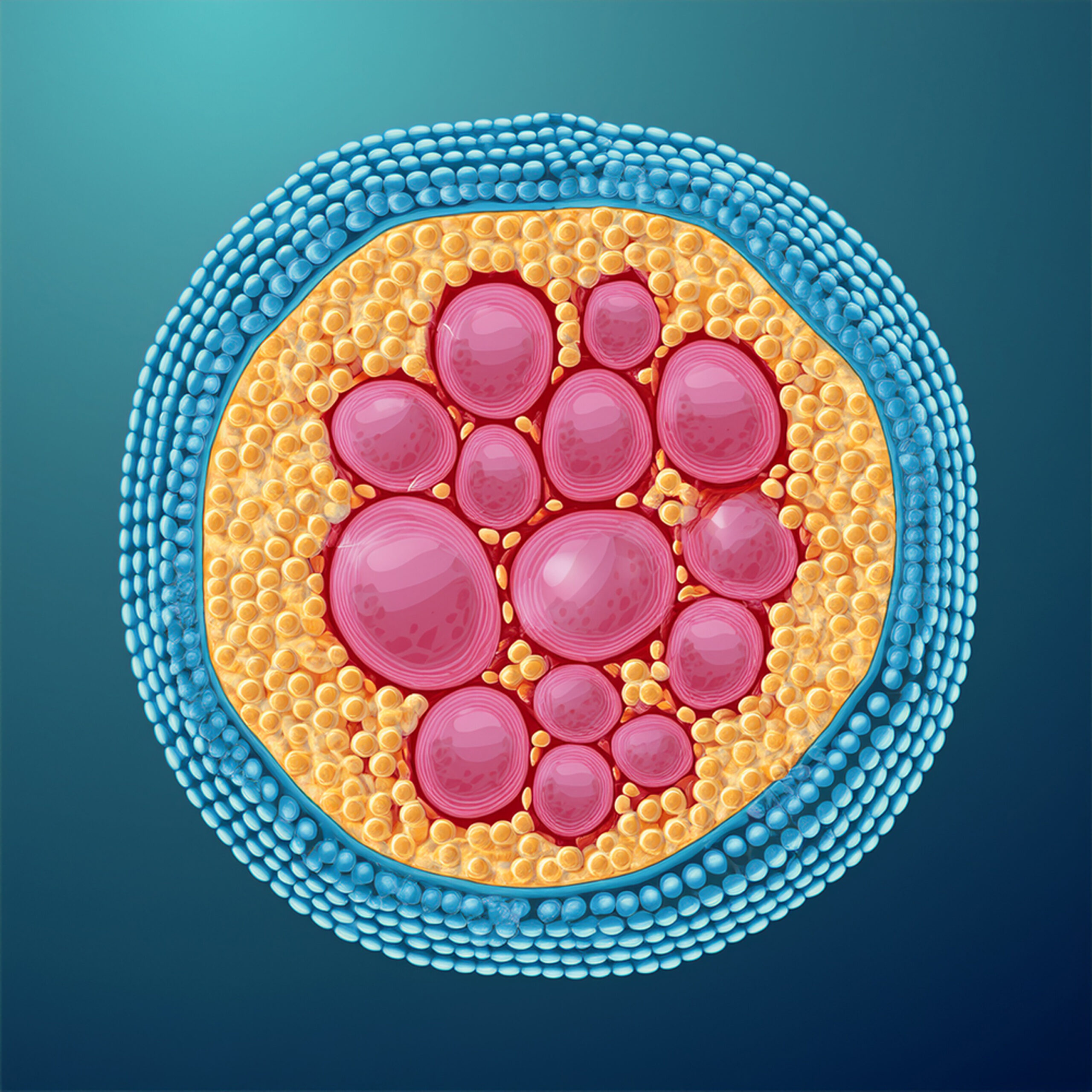







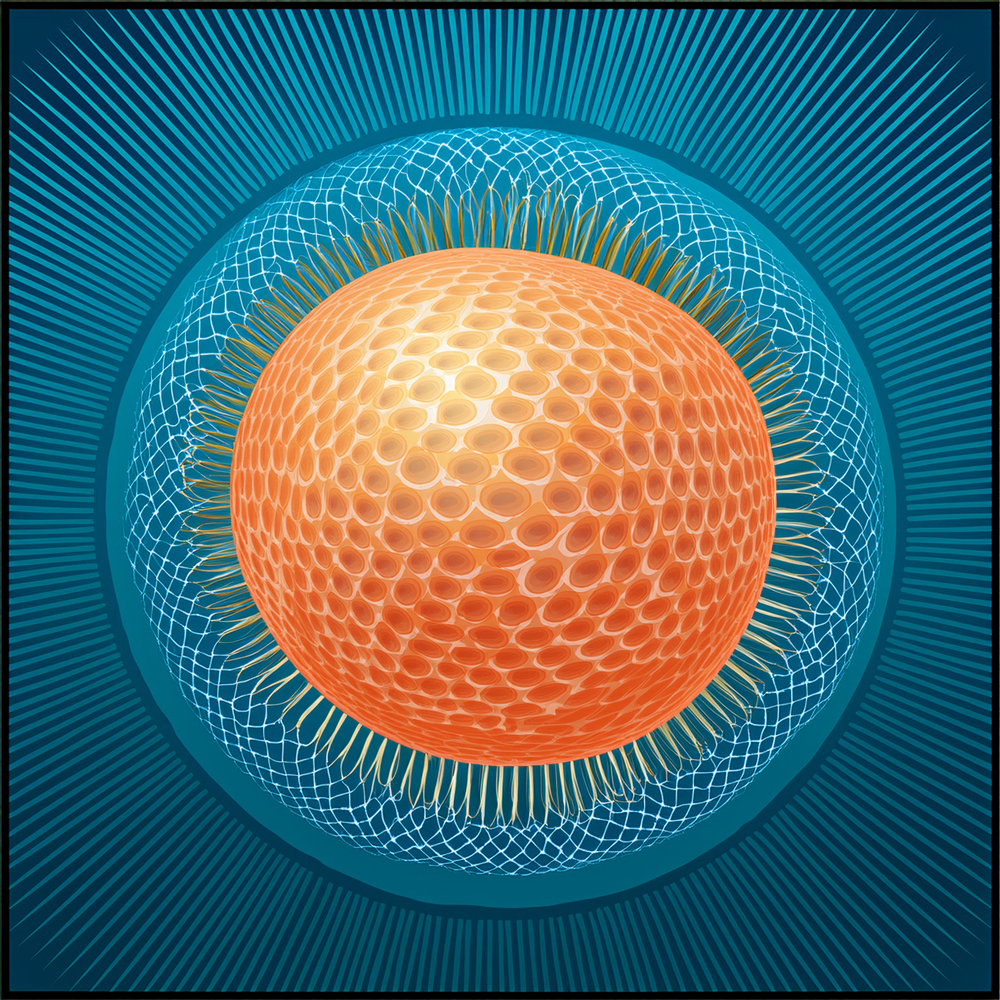





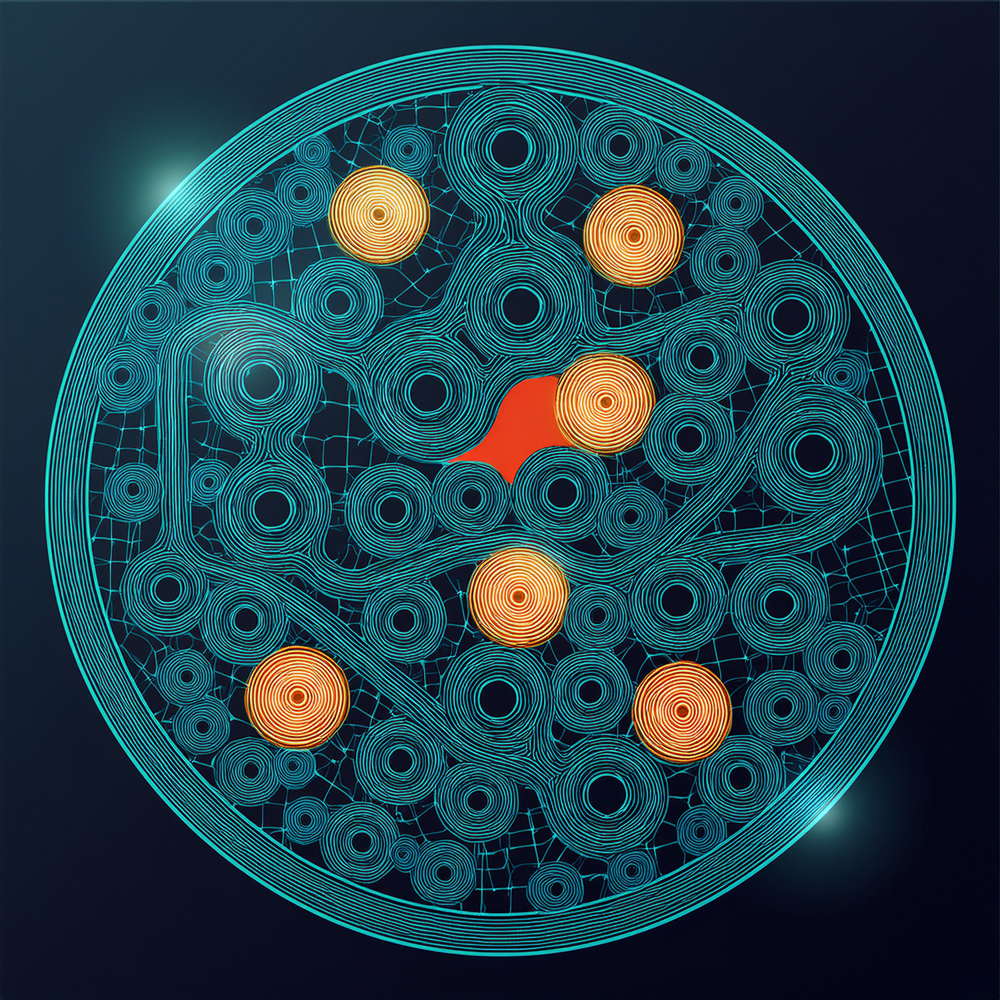
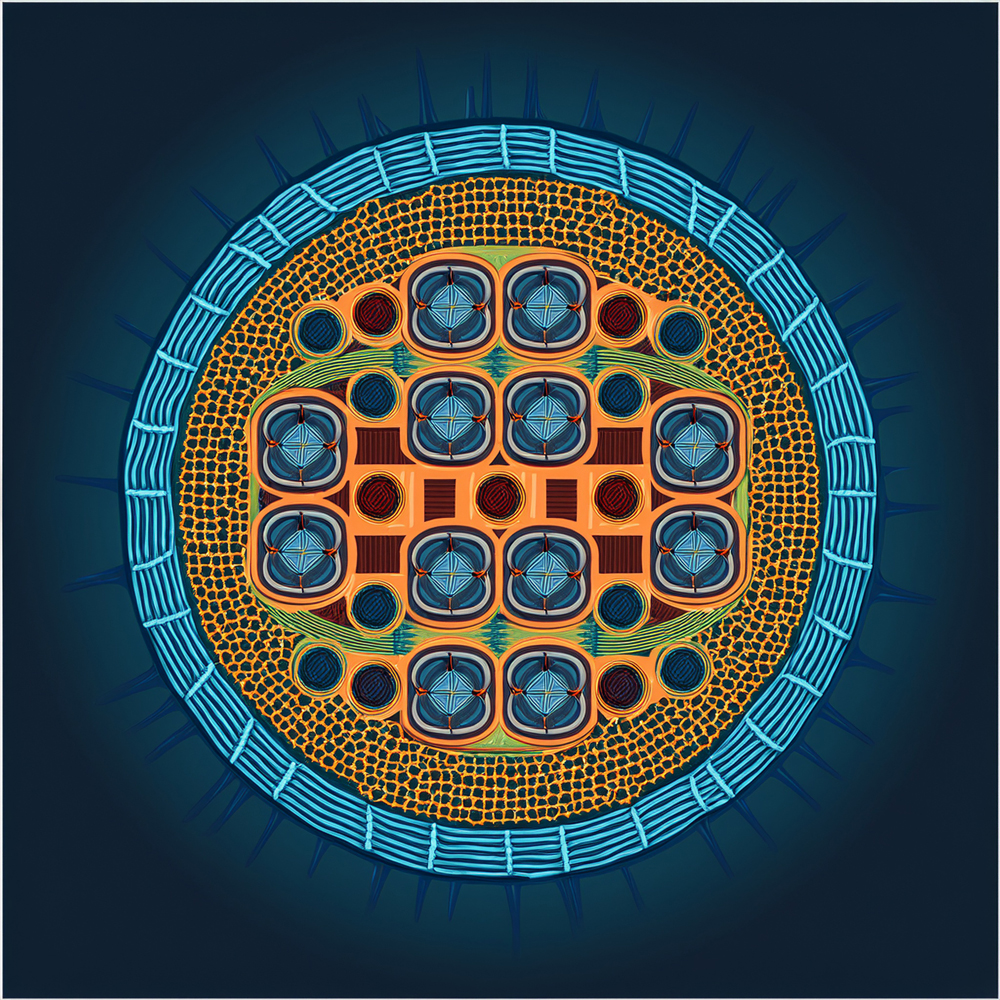
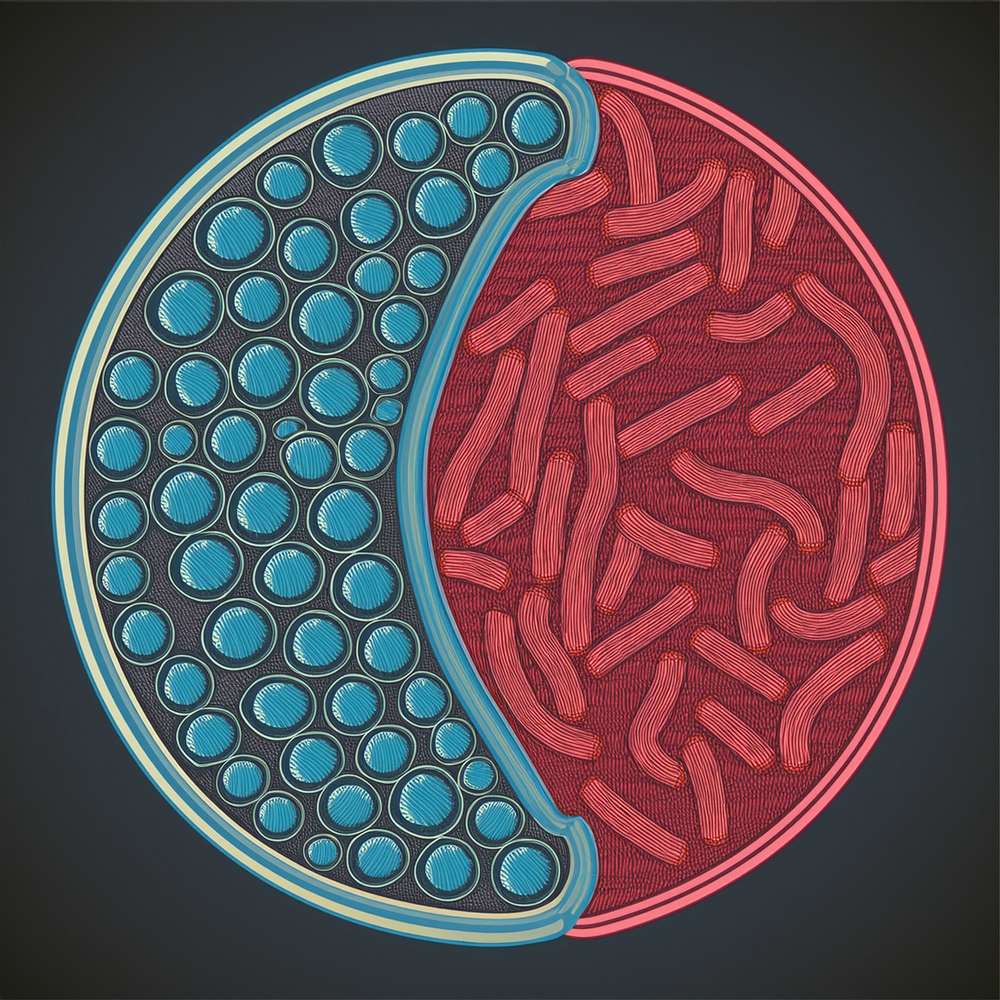
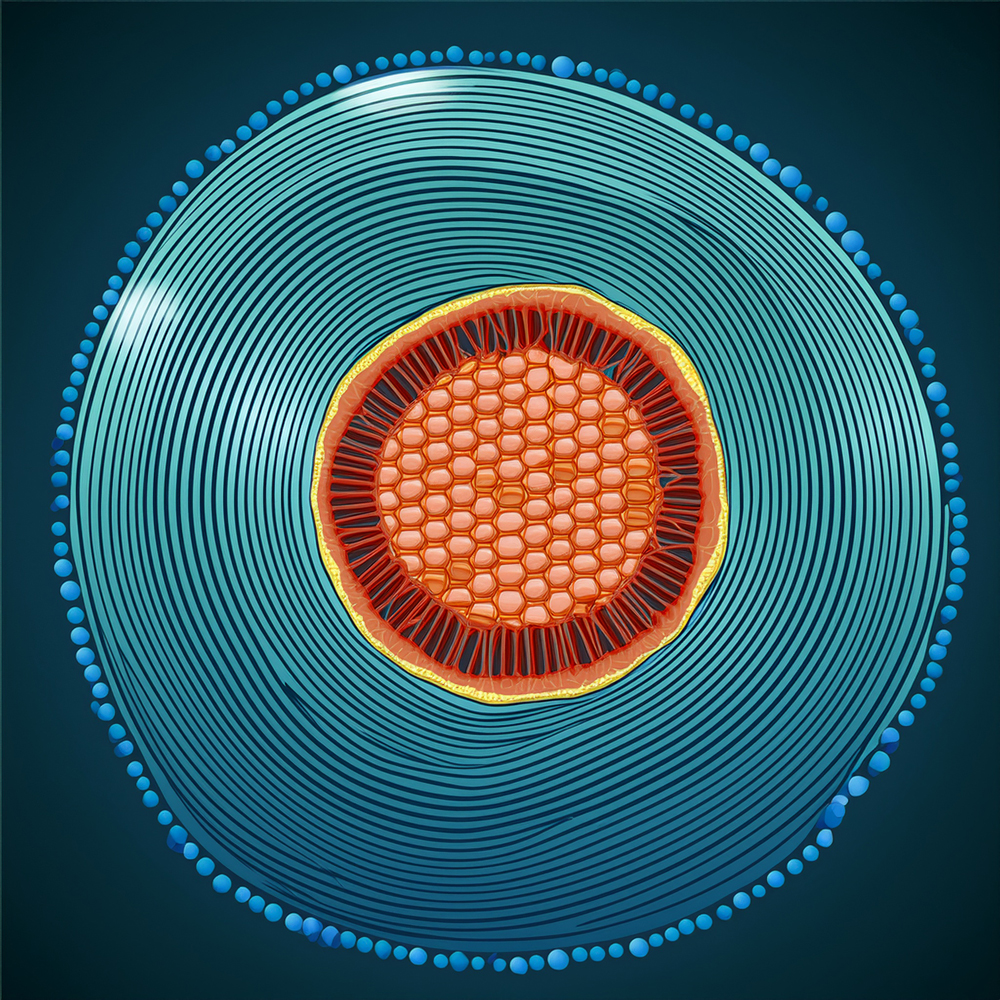


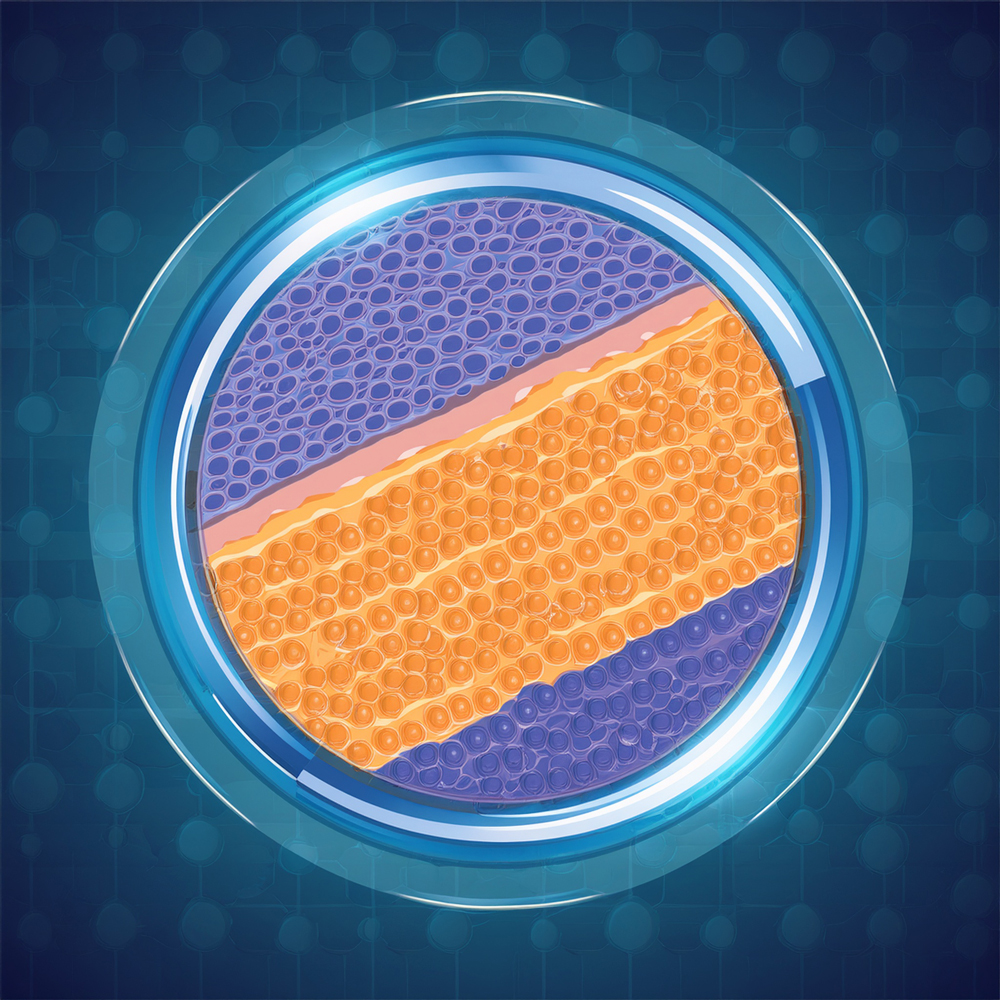
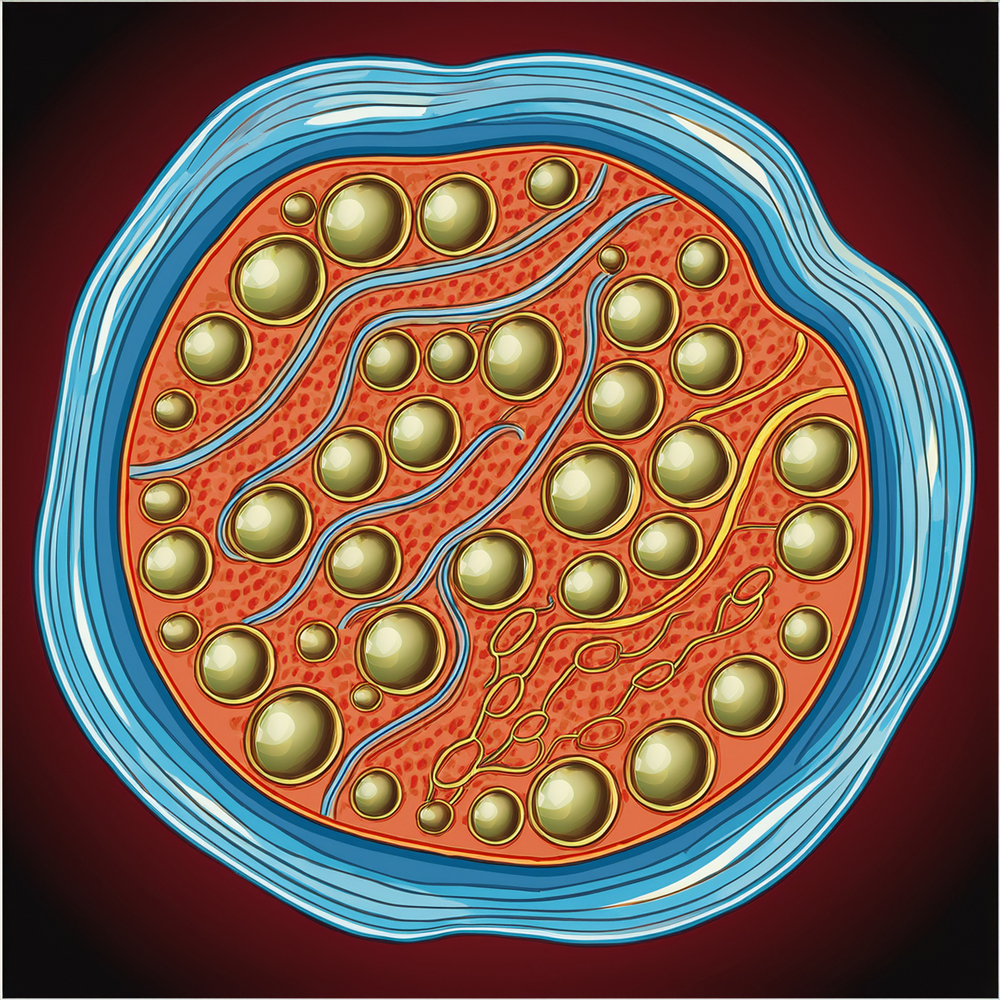

Above: A series of AI generations for “bilipid cell membrane.” Note the rigid, shell-like structures that defy thermodynamic logic.
Clinical Implication: In the visualization of lipid nanoparticle (LNP) delivery systems or viral entry mechanisms, a solid-wall representation creates a false mental model. If the visual data implies a rigid barrier, it contradicts the pharmacokinetic mechanism of fusion-based delivery. For accurate scientific communication, the “Visual Stroma” must demonstrate potential for fluidity.
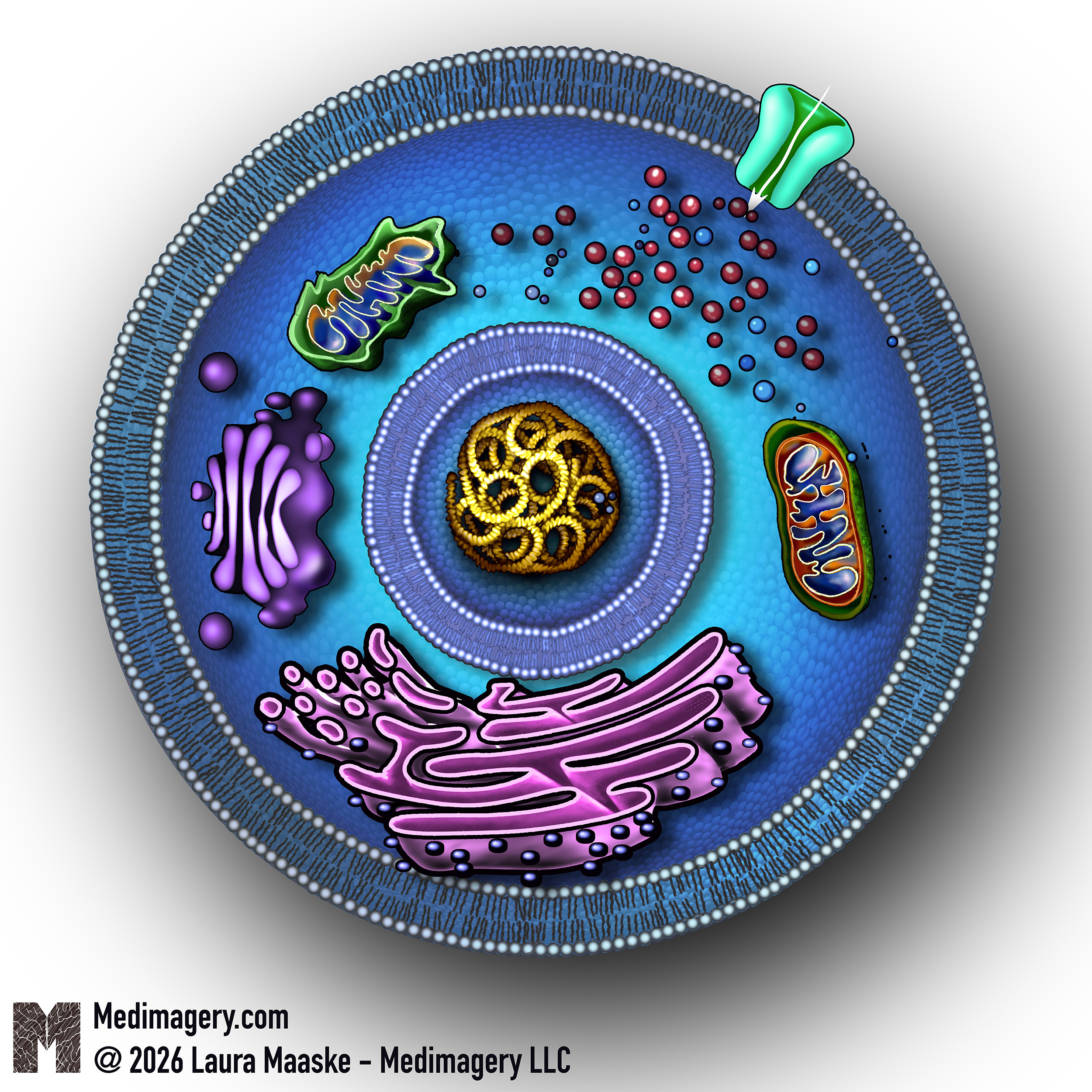 The Biological Reality: Note the fluid mosaic model, correct channel orientation, and distinct hydrophilic/hydrophobic layering. (Illustrated by Laura Maaske)
3. Case Analysis: Genomic Integrity and Chirality
Deoxyribonucleic acid (DNA) is governed by strict geometric and chemical constraints. B-DNA, the biologically active form in most aqueous systems, is defined by a right-handed helix and complementary hydrogen bonding between base pairs.
Analysis of Generative Outputs: Generative models treat the double helix as a decorative spiral rather than a coded molecule, leading to three primary failure modes:
-
Chirality Reversal: A statistically significant portion of AI-generated DNA exhibits left-handed chirality (Z-DNA configuration) or indeterminate twisting. In molecular docking and gene therapy, chirality is binary; a left-handed helix represents a fundamentally different target.
-
Structural Dissociation: Models frequently generate “broken ladders” where base pairs fail to bridge the phosphate backbones, depicting a structurally compromised molecule.
-
Non-Standard Strands: “Hallucinated” strands (triple or quadruple helices) appear frequently, introducing biological impossibilities into data meant for education or investor relations.






























Above: Illustrations with massive textural detail that fail the basic test of chirality. Not a single instance captures the correct B-DNA configuration due to the AI’s drive for “visual novelty” over structural accuracy.
Clinical Implication: In the context of CRISPR-Cas9 or gene-editing platforms, visual accuracy is a proxy for technical precision. Presenting “hallucinated DNA” with incorrect chirality signals a failure in technical due diligence to investors and peers.
4. Strategic Protocol: The Human-in-the-Loop
As the industry moves toward automated generation, we cannot rely on “prompt engineering” alone to ensure safety. To mitigate these risks, organizations must implement a validation protocol. Visual assets must be audited for chemical constraints before publication.
The Solution: The Clinical Verification Protocol (CVP)
I propose a standardized 3-Tier Audit for all AI-generated biomedical assets.
Tier 1: The Geometric Audit (Physics)
-
Chirality Check: Does the molecule/structure twist in the biologically active direction (e.g., Right-Handed B-DNA)?
-
Load Path Integrity: Do weight-bearing structures have continuous density? Are they solid or porous?
-
Volumetric Consistency: Do closed loops (vessels/chambers) remain closed? Are there “Escher-like” geometry breaks?
Tier 2: The Functional Audit (Physiology)
-
Flow Logic: Does the fluid (blood, ion, air) have a clear entrance and exit? Is the circuit complete?
-
Kinematic Logic: Do muscles cross a joint? Can the depicted anatomy actually move, or is it fused?
-
Barrier Logic: Are membranes fluid or solid? Does the texture imply the correct permeability?
Tier 3: The Semantic Audit (Context)
-
Pathology vs. Norm: Does the image accidentally depict a disease state (e.g., Trichiasis, Osteoporosis) when a healthy state was requested?
-
Metaphor Distinction: Is the AI confusing a visual metaphor (e.g., “Tree of Life”) with anatomical reality (e.g., “Brain Roots”)?
Implementation: This protocol requires a Subject Matter Expert (SME) in the loop. The AI generates; the SME audits against the CVP; only then is the asset released.


